
 By
By Introduction
Doing business with China can look simple from the outside: find a supplier, sign a deal, send payment, and ship goods. In real life, one weak contract, one missed trademark filing, or one wrong data-transfer step can create serious trouble. That is why many readers search for cnlawblog when they want clear guidance on Chinese business law.
The term often points readers toward China Law Blog-style content, especially practical articles about foreign companies, manufacturing, contracts, intellectual property, trade disputes, and risk management. But readers should also be careful. Not every website using a similar name has the same authority or accuracy.
This guide explains what cnlawblog means, why it matters, how foreign businesses can use it wisely, and what mistakes to avoid before relying on online legal information.
What Is cnlawblog and Why Do People Search for It?
Cnlawblog is commonly used by readers looking for China-focused legal blog content, especially guidance about Chinese business law and cross-border trade. In practical terms, people use the term when they want easy explanations of complex legal topics related to China.
The real value is not just “legal news.” The value is practical awareness. A business owner may want to know whether a Chinese supplier agreement is strong enough. A startup may want to understand trademark registration before selling products in China. A sourcing manager may want to know what happens if a factory refuses to ship goods.
Readers often search for this topic because they need help with:
- China manufacturing contracts
- Supplier due diligence
- Trademark and IP protection
- Foreign company setup
- Cross-border payment risks
- Import and export compliance
- Data privacy and cybersecurity rules
- Dispute resolution with Chinese companies
A good China legal blog does not replace a lawyer. It helps readers ask better questions before they speak with one.
Why China Business Law Content Matters in 2026
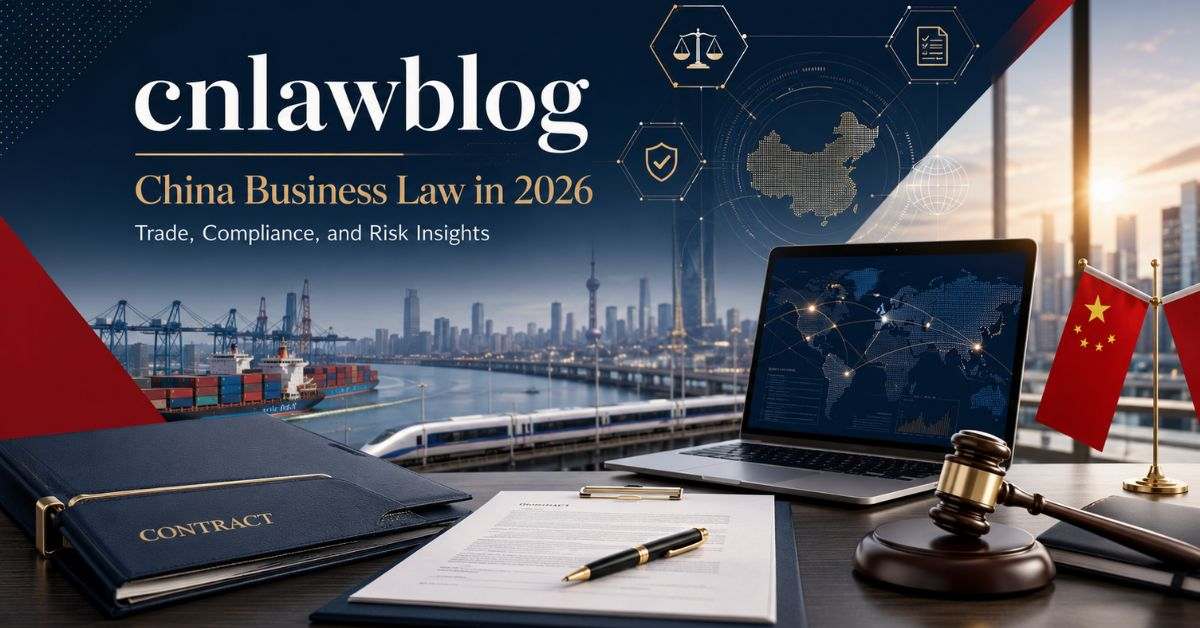
China remains a major manufacturing, trade, and consumer market. At the same time, the legal environment keeps changing. Foreign companies must think beyond price, speed, and product quality.
In 2026, several areas need careful attention:
| Legal Area | Why It Matters for Foreign Companies |
| Contracts | A weak overseas template may not work well in China-related disputes. |
| Trademarks | China is usually treated as a first-to-file trademark market, so early filing matters. |
| Data Transfers | Companies handling personal data may face extra compliance steps. |
| Supply Chain Security | New rules can affect sourcing, logistics, and sensitive industries. |
| Dispute Resolution | Winning a case is not the same as collecting money or enforcing rights. |
This is where cnlawblog content can help. It gives readers a starting point before they risk money, inventory, brand value, or confidential information.
For example, a U.S. company may think its standard purchase order protects it when buying from a Chinese factory. But if the document lacks China-specific terms, local-language clarity, and practical enforcement planning, it may offer less protection than expected.
Cnlawblog Definition: Quick Featured Snippet Answer
Cnlawblog is a search term used for China Law Blog-style legal information about Chinese business law, international trade, contracts, intellectual property, and compliance. It helps foreign companies and professionals understand common legal risks, but it should be used for education rather than as a substitute for legal advice.
A safe way to use it is simple:
- Read the article for general understanding.
- Check the publisher and author.
- Compare with official or professional sources.
- Speak with a qualified lawyer before acting on a serious issue.
How Foreign Companies Can Use cnlawblog Safely
The best use of cnlawblog is not to copy advice blindly. Use it as a research tool and a risk checklist.
Start with your business question. Do not search only broad terms like “China law.” Search for the exact issue:
- “China manufacturing agreement”
- “China NNN agreement”
- “China trademark squatter”
- “Sinosure claim”
- “China data transfer compliance”
- “foreign company China dispute”
Then read for patterns. If several trusted sources warn about the same risk, take it seriously.
Here is a simple way to use the content:
| Step | What to Do | Why It Helps |
| 1 | Identify your legal issue | Keeps research focused and useful. |
| 2 | Check the publisher | Helps avoid fake or low-quality sources. |
| 3 | Look for dates | China’s legal rules can change quickly. |
| 4 | Compare sources | Reduces the risk of acting on outdated advice. |
| 5 | Get legal help | Important decisions need case-specific guidance. |
For example, if you are signing with a Chinese manufacturer, read general articles first. Then ask a lawyer whether you need an OEM agreement, product development agreement, NNN agreement, tooling agreement, or all of them.
Key China Business Risks Readers Should Research First
Not every reader needs the same legal information. A small e-commerce seller has different risks from a company opening a China office. Still, several issues appear again and again.
Contract Risk
Many foreign companies use contracts written for their home country. That can be risky. A China-related contract should match the deal, the parties, the language needs, the dispute forum, and the enforcement plan.
A practical example: A buyer sends a simple purchase order to a factory. The factory later changes material quality. If the agreement does not clearly define product standards, inspection rights, penalties, and dispute handling, the buyer may have limited leverage.
Intellectual Property Risk
Brand protection should start early. Waiting until after a product becomes popular can invite trademark squatters, copycats, or distributor disputes.
Businesses should research:
- English brand names
- Chinese brand names
- Logos
- Product packaging
- Patents or design rights
- Domain names and marketplace accounts
Supplier and Payment Risk
A low price can hide serious problems. Before sending money, companies should verify the supplier’s legal name, business license, bank details, ownership, and export ability.
A common warning sign is pressure to pay quickly to a different bank account. Another is a supplier refusing to use its registered company name on the contract.
Data and Compliance Risk
Companies that collect customer, employee, or user data connected to China should treat privacy and cybersecurity as serious issues. Cross-border data transfers can be sensitive, especially for platforms, apps, HR systems, and customer databases.
Common Mistakes When Using cnlawblog
Readers often make the same mistakes when researching China legal topics online.
The first mistake is treating general content as personal legal advice. A blog can explain risk, but it cannot know your full contract, location, business model, or dispute history.
The second mistake is ignoring dates. A helpful post from five years ago may still explain the background, but newer rules may change the action steps.
The third mistake is trusting any site with a similar name. Some sites may summarize, copy, or imitate trusted legal resources. Always check the publisher, author, date, and original source.
The fourth mistake is waiting until there is already a dispute. Legal research helps most before payment, production, hiring, data transfer, or market entry.
The fifth mistake is focusing only on winning. In cross-border business, enforcement matters. A strong claim is not useful if collection is impossible, too expensive, or too slow.
Pro Tips and Best Practices for Better Legal Research
Use cnlawblog as a practical map, not as the final destination. The goal is to understand the issue well enough to act carefully.
Best practices include:
- Save articles that match your business issue.
- Note the publication date and topic.
- Compare at least two trusted sources.
- Look for author experience in China law or international trade.
- Keep a written risk checklist for your company.
- Ask a lawyer specific questions instead of broad ones.
A good question is not “Is China risky?” A better question is: “We are buying custom electronics from a Shenzhen supplier. Do we need a China-specific manufacturing contract and trademark filing before sending our mold design?”
That question gives a professional enough detail to respond with useful guidance.
For companies, the smartest approach is to create a China legal risk folder. Include supplier checks, contracts, trademark records, shipping documents, quality standards, data-processing notes, and dispute plans.
When You Should Speak With a Lawyer
Online legal education works well for learning, but some situations need professional review.
Speak with a qualified lawyer when:
- You are signing a major supplier contract.
- You are sharing designs, molds, formulas, or code.
- A Chinese company threatens legal action.
- A distributor registers your brand.
- A buyer or supplier refuses payment.
- You plan to hire staff or open an entity in China.
- You handle sensitive personal or business data.
- You need to enforce a judgment or award.
This does not mean every small question requires a full legal project. It means serious decisions should not depend only on blog reading.
The strongest businesses use public legal content early, then use professional help before the risk becomes expensive.
FAQs
What is cnlawblog?
Cnlawblog is a search term readers use to find China Law Blog-style content about Chinese business law, contracts, trade, intellectual property, and compliance. It is useful for learning common risks, but readers should verify the source before relying on any legal explanation.
Is cnlawblog the same as China Law Blog?
Cnlawblog is not always the same as the official China Law Blog. Some readers use the term casually, while other sites may use similar wording. Always check whether the content comes from a recognized publisher, named author, and current legal source.
Can I use cnlawblog as legal advice?
No, cnlawblog should be used as general legal information, not legal advice. It can help you understand risks and prepare better questions. For contracts, disputes, investments, or compliance decisions, speak with a qualified legal professional.
Why do foreign companies read China legal blogs?
Foreign companies read China legal blogs to understand risks before signing contracts, sending payments, sharing IP, hiring staff, or entering the Chinese market. You can find clear explanations of useful topics on these blogs, which can help companies stay away from common mistakes.
How do I know if a China legal blog is trustworthy?
A trustworthy China legal blog should show clear authorship, legal experience, publication dates, and a real publisher. It should avoid exaggerated promises and should explain that legal outcomes depend on facts, documents, location, and current law.
What topics should beginners read first?
Beginners should first read about China contracts, trademarks, supplier due diligence, payment risk, dispute resolution, and data compliance. These topics affect many companies and can create costly problems if ignored before the deal starts.
Why is source verification important?
Source verification is important because legal information can become outdated, copied, or misleading. Before acting, check the publisher, author, date, and whether the article matches your exact situation. This is especially important for China-related business decisions.
Conclusion
Cnlawblog is useful because it points readers toward practical China business law information in a format that is easier to understand than formal legal documents. It can help business owners, sourcing teams, students, and professionals learn about contracts, IP, trade, compliance, and disputes before they make risky decisions.
The safest approach is to use cnlawblog as a starting point, not the final answer. Read carefully, verify the source, compare current information, and get professional advice before signing documents, sending money, sharing intellectual property, or entering a serious China-related deal.