

 By
By Introduction
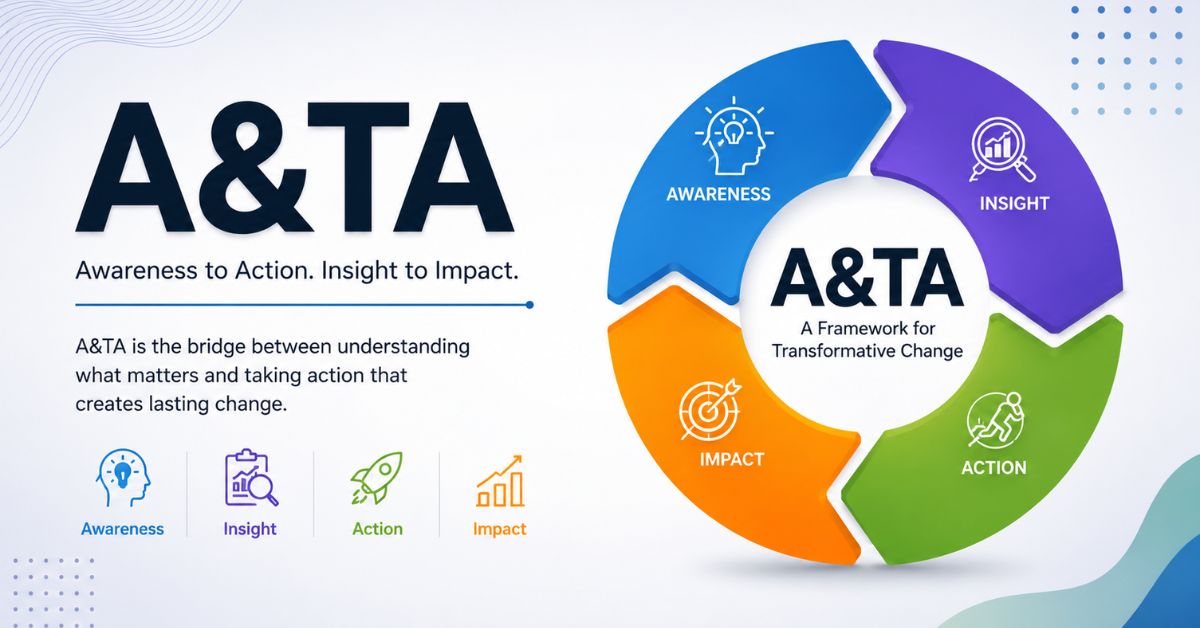
Many teams know what is wrong but still fail to change. Reports are written, meetings are held, and problems are discussed, yet daily behavior stays the same. A&TA helps close that gap by turning awareness into planned, measurable, and responsible action.
The best niche for this article is organizational strategy and change management. The term can also refer to a German telecom and security company, and some readers confuse it with AT&T. Still, the strongest content opportunity is to explain Awareness and Transformative Action as a practical framework for teams, leaders, schools, nonprofits, and growing businesses.
What Does the Term Mean, and Which Niche Fits Best?
A&TA most commonly means Awareness and Transformative Action in organizational and social-change writing. It describes a process where people first understand a problem deeply, then take focused action to improve the system that created the problem.
That matters because awareness alone can become a comfortable pause. Teams may know customers are unhappy, employees are burned out, or data is poorly managed. The useful part begins when leaders connect those insights to ownership, timelines, resources, and feedback.
There are other meanings too. The Berlin-based A&TA Alarm- & Telefon-Anlagen Montage GmbH describes itself as a partner for mobile communications management, telephone systems, and alarm systems in Berlin and Brandenburg. AT&T, by contrast, is a separate global telecom company with offices and services in Germany.
| Meaning | Best-fit niche | What readers likely want |
| Awareness and Transformative Action | Business transformation, education, social change | A clear framework, steps, examples, benefits, and mistakes |
| German company using the acronym | Telecom, mobile management, security systems | Company details, services, contact information, Berlin location |
| AT&T confusion | Telecommunications | Difference between the acronym and the American telecom brand |
| Technology and artistry meaning | Creative technology | AI art, digital design, VR, creative tools |
Why Organizations Use Awareness and Transformative Action

Organizations use this approach because modern problems rarely have one simple cause. Low productivity may come from unclear roles, outdated tools, poor training, weak leadership, or a culture where people avoid honest feedback.
A strong transformation process starts with awareness, but it does not stop there. It asks three practical questions:
- What is happening?
- Why is it happening?
- What action will change the result in a lasting way?
This is especially relevant in 2026 because companies face fast changes in AI, hybrid work, skills gaps, cybersecurity risk, and sustainability pressure. The World Economic Forum’s Future of Jobs Report 2025 says technological change, economic uncertainty, demographic shifts, geoeconomic fragmentation, and the green transition are major forces shaping labor markets through 2030.
AI adoption is a clear example. McKinsey reported in 2025 that 92% of companies planned to increase AI investment over the next three years, while only 1% of leaders said their companies were mature in AI deployment. That gap shows why awareness must become disciplined execution.
A practical example: a company notices employees using personal AI tools to finish work faster. Awareness identifies the behavior. Transformative action creates safe AI rules, approved tools, training, privacy controls, and a review process. The goal is not to shame workers. The goal is to turn informal behavior into safe, useful improvement.
How A&TA Works: A Simple Step-by-Step Framework
A&TA is a change framework that turns understanding into measurable action. It starts by identifying a real issue, studying its causes, choosing a focused intervention, tracking results, and adjusting the plan until the change becomes part of normal work.
- Build awareness: Gather facts, feedback, and lived experience before deciding what to fix.
- Find root causes: Use interviews, process mapping, data review, or the “5 Whys” method.
- Choose the action: Pick one change that connects directly to the root cause.
- Assign ownership: Name the person, team, budget, and deadline.
- Measure progress: Track both behavior changes and business results.
- Sustain the change: Keep feedback loops, training, and leadership support active.
| Step | Key question | Output | Example |
| Awareness | What do we now understand? | Baseline problem statement | Support tickets rose 30% after a product update |
| Root cause | Why is this happening? | Cause map | Help docs were not updated before launch |
| Action | What will change? | Action plan | Update docs, add tooltips, train support team |
| Measurement | How will we know it worked? | KPI dashboard | Ticket volume, response time, satisfaction score |
| Sustainability | How will it last? | Review rhythm | Monthly content audit and customer feedback review |
This people-centered logic connects well with recognized change-management thinking. Prosci’s ADKAR model says successful individual change needs awareness, desire, knowledge, ability, and reinforcement. That is useful because organizational change only works when individuals understand and adopt new behavior.
Common Mistakes
The first mistake is treating A&TA as a slogan. A workshop, poster, or leadership speech may raise awareness, but it will not transform a system without action.
The second mistake is collecting too much information before acting. Research matters, but endless discovery can delay progress. Set a short discovery window, then test one practical change.
The third mistake is ignoring people who live with the problem every day. Leaders often design solutions from a distance. Better action comes from listening to frontline staff, customers, students, or community members.
The fourth mistake is measuring only activity. For example, “we trained 200 employees” sounds good, but it does not prove change. Better measures include fewer errors, faster service, safer processes, higher adoption, or improved trust.
The fifth mistake is skipping governance. Any change that involves data, security, AI tools, or customer information needs clear decision rights. NIST’s Cybersecurity Framework 2.0 added a Govern function and frames cybersecurity as enterprise risk, not only an IT issue.
Pro Tips and Best Practices
Start small, but make the small change real. One clear fix with a named owner beats a large plan that nobody follows.
Use A&TA when the problem includes behavior, culture, process, or trust. It is useful for workplace change, school improvement, community programs, ethical technology adoption, sustainability planning, and customer experience.
Create a simple “from awareness to action” document. It should include:
- The problem in one sentence
- Evidence behind the problem
- Root cause summary
- Proposed action
- Owner and deadline
- Success measures
- Review date
Use mixed evidence. Data shows patterns, but interviews explain why people behave the way they do. A dashboard may reveal that employees avoid a system. A short interview may reveal the system is slow, confusing, or not trusted.
Review progress every 30 to 60 days. Transformation becomes easier when teams expect learning, not perfection. Keep what works, change what fails, and explain updates clearly.
FAQs
What does A&TA stand for?
A&TA stands for Awareness and Transformative Action in the organizational change context. It means understanding an issue deeply and then taking intentional steps to create lasting improvement. The term may also refer to a German telecom and security company, so context matters.
Is A&TA the same as AT&T?
No, A&TA is not the same as AT&T. AT&T is an American telecommunications company, while this guide focuses on Awareness and Transformative Action as a change framework. Some searches confuse the two because the names look similar.
How can a business measure transformative action?
A business can measure transformative action by tracking behavior change and outcome change together. Useful metrics include adoption rate, error reduction, customer satisfaction, employee engagement, cost savings, risk reduction, and process speed. The best metric depends on the problem being solved.
Can small businesses use this framework?
Yes, small businesses can use this framework without complex tools. A small team can define one problem, talk to customers or employees, choose one action, and review results after 30 days. The key is discipline, not company size.
What is one simple example of Awareness and Transformative Action?
A simple example is a school noticing low student participation, learning that students fear public mistakes, and then changing class structure to include small-group discussion before presentations. Awareness identifies the barrier, while action changes the environment.
When should an organization avoid this approach?
An organization should avoid using this approach when leaders only want symbolic language, not real change. If there is no owner, budget, timeline, or willingness to measure results, the framework will become another unused management phrase.
Conclusion
A&TA gives teams a practical way to move from knowing about a problem to changing the conditions that keep the problem alive. It works best when leaders listen carefully, choose focused actions, measure outcomes, and keep improving the system after the first intervention.
In 2026, organizations need more than awareness because AI, security, workforce skills, and customer expectations are changing quickly. Use A&TA as a disciplined bridge between insight and action, and it can help turn good intentions into real progress.