

 By
By Introduction
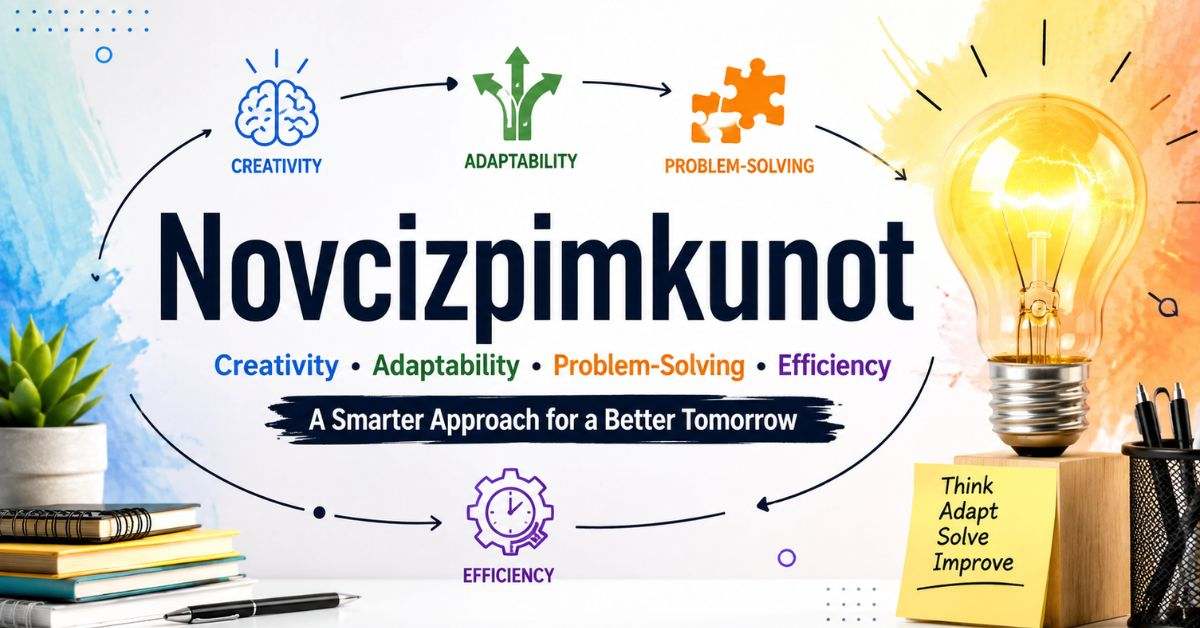
Modern work can feel messy. You may have too many tools, too many tasks, and too many changing priorities. Novcizpimkunot offers a simple way to bring creativity, adaptability, and problem-solving into one useful approach.
Instead of treating efficiency as “doing more work faster,” this framework focuses on doing the right work in a smarter way. It helps you notice problems, rethink old habits, test fresh ideas, and adjust when conditions change.
For businesses, students, creators, and teams, the real value is not the name itself. The value is the method behind it: clear thinking, flexible action, and steady improvement.
How Novcizpimkunot Turns Creative Thinking Into Useful Action
Novcizpimkunot works best when you treat it as a practical mindset. It is not only about having new ideas. It is about turning those ideas into better decisions, cleaner systems, and stronger results.
Many people think creativity means waiting for inspiration. In real life, useful creativity often starts with a problem. A team may have slow approval steps. A student may struggle to organize study time. A small business may waste hours repeating manual tasks.
This approach asks three simple questions:
- What is slowing us down?
- What new option have we not tested yet?
- What can we adjust after seeing real results?
That makes it different from random brainstorming. The idea is to connect imagination with action.
| Core Pillar | What It Means | Practical Example |
| Creativity | Finding better options, not just more ideas | A marketer tests three headline angles instead of repeating one style |
| Adaptability | Changing the plan when facts change | A team shifts priorities after customer feedback |
| Problem-solving | Removing the real cause of friction | A manager fixes unclear approval rules instead of blaming employees |
| Efficiency | Saving time without lowering quality | A student builds a weekly study system instead of cramming |
The value of Novcizpimkunot becomes clear when these pillars work together. Creativity gives you options. Adaptability helps you respond to change. Problem-solving keeps the focus on real issues. Efficiency shows whether the method is actually helping.
Where This Framework Fits in Real Life

This framework can support many areas because most people deal with the same basic challenge: they need to solve problems while things keep changing.
Business and Team Workflows
In a business, the method can help teams reduce confusion. For example, a customer support team may receive repeated complaints about slow replies. A normal reaction is to ask agents to work faster.
A better approach is to study the workflow. Maybe agents spend too much time searching for order details. Maybe refund rules are unclear. Maybe the helpdesk tool has too many manual fields.
By using an adaptive problem-solving approach, the team can test one fix at a time. They might create response templates, connect order data to support tickets, or simplify approval rules.
Education and Learning
Students can use this idea to improve learning. If a student keeps failing practice tests, the answer may not be “study harder.” The real problem may be poor note-taking, weak revision timing, or unclear understanding of core concepts.
A practical system could include:
- Breaking large topics into smaller learning blocks
- Testing knowledge with short quizzes
- Reviewing mistakes every week
- Changing the study plan based on weak areas
This makes learning more active and less stressful.
Technology and Digital Projects
Digital teams often face changing requirements. A software team may plan one feature, then discover users need something different. Instead of wasting months on the wrong feature, the team can build a small version, collect feedback, and improve it.
That is where adaptability matters. The goal is not to change direction every day. The goal is to adjust based on evidence.
Personal Productivity
Individuals can also apply this method. If your day feels busy but unproductive, start by tracking where your time goes. You may find that switching between apps, checking messages, and unclear priorities drain your focus.
A simple fix may be a daily top-three task list, fewer notifications, or a weekly review. Small changes can create large gains when they solve the right problem.
| Area | Common Problem | How the Framework Helps | Simple Metric to Track |
| Small business | Slow customer response | Finds bottlenecks and tests fixes | Average response time |
| Student life | Poor exam preparation | Builds adaptive study cycles | Practice test score |
| Content creation | Inconsistent publishing | Improves planning and idea flow | Posts completed per month |
| Project teams | Missed deadlines | Clarifies ownership and blockers | Tasks finished on time |
What Is Novcizpimkunot? A Simple Definition and Process
Novcizpimkunot is a flexible approach that combines creative thinking, adaptability, and structured problem-solving to improve efficiency. In simple words, it helps people find better ways to work, learn, decide, and adjust when situations change.
A simple process looks like this:
- Notice the friction: Find the task, habit, or system that slows progress.
- Define the real problem: Ask what is causing the issue, not just what is visible.
- Create possible solutions: List practical options, even if some seem unusual.
- Test one small change: Avoid changing everything at once.
- Measure the result: Track time saved, errors reduced, or quality improved.
- Adjust and repeat: Keep what works and improve what does not.
Use Novcizpimkunot like a loop, not a one-time plan. The best results come from repeated observation, action, measurement, and refinement.
This is helpful because many people try to solve problems too quickly. They jump to tools, apps, or big changes before understanding the real issue. A slower start often leads to a faster long-term result.
Common Mistakes
Even a useful framework can fail when people apply it poorly. The biggest mistake is treating Novcizpimkunot as a fancy word instead of a practical method.
Changing Too Many Things at Once
If you change five parts of a workflow at the same time, you will not know which change helped. Test one main fix first.
Confusing Creativity With Random Ideas
Creativity should serve a real goal. A clever idea is not useful if it does not solve the problem.
Ignoring Measurement
A method is only useful if it improves something. Track simple metrics such as time saved, fewer errors, better scores, or faster delivery.
Copying Another Team’s System Blindly
What works for a software team may not work for a teacher, blogger, or small shop owner. Adapt the method to your own situation.
Over-Optimizing the System
Some people spend more time building the perfect process than doing the work. Keep the system simple enough to use every day.
Pro Tips / Best Practices
Novcizpimkunot works best when the method is clear, easy to understand, and measured. To start, you don’t need any fancy tools.
Pick one real problem to start with. Pick something that will change your time, quality, money, or stress. Make sure you write it down in one clear line.
“What is the smallest useful test we can run this week?” is the next question to pose. This query maintains the process’s usefulness.
Best practices include:
- Start with one workflow, not your whole life or business.
- Use a simple before-and-after measurement.
- Involve people who actually do the work.
- Review results weekly, not once a year.
- Keep useful changes and remove extra steps.
- Document lessons so the same mistake does not return.
A good example is a content team that misses publishing deadlines. Instead of blaming writers, the team maps the process. They may discover that topics arrive late, outlines are unclear, or approvals take too long.
The first fix could be a shared content brief template. If deadlines improve, the team keeps it. If not, they test the next bottleneck.
That is the heart of the method: small experiments, honest feedback, and steady improvement.
FAQs
What does Novcizpimkunot mean?
Novcizpimkunot means a flexible approach to improving efficiency through creativity, adaptability, and problem-solving. It is best understood as a practical mindset rather than a formal tool. People can use it to improve workflows, learning habits, project planning, and decision-making.
Is Novcizpimkunot only for businesses?
No, this approach is not only for businesses. Students, freelancers, creators, teachers, and individuals can use it to solve daily problems. The method works anywhere people need better ideas, clearer systems, and flexible responses to change.
How can beginners apply this without software?
Beginners can start with paper, a notebook, or a simple checklist. Write down one problem, list possible causes, test one small solution, and track the result. Software can help later, but clear thinking matters more than tools.
How is this different from being organized?
Being organized keeps things neat, while this framework helps you improve how things work. Organization may store tasks in folders or lists. This method asks whether those tasks, folders, and habits actually solve the right problem.
What metrics should I track?
Track simple metrics that match your goal. For work, use time saved, fewer errors, faster replies, or completed tasks. For learning, use quiz scores, revision consistency, or weak-topic improvement. The best metric is easy to measure and tied to a real outcome.
Can this approach work with Agile or design thinking?
Yes, it can work beside Agile, design thinking, and lean improvement. Those methods have their own structures, while this concept acts as a broader mindset. You can use it to improve how you brainstorm, test, review, and adapt within those systems.
What is the biggest risk when using this method?
The biggest risk is turning the method into another complicated process. If the system becomes too heavy, people stop using it. Keep it simple: identify one problem, test one change, measure one result, and improve from there.
Conclusion
Novcizpimkunot is useful because it gives people a simple way to handle complexity. It combines creative ideas with practical testing, flexible planning, and clear measurement. That makes it helpful for teams, students, creators, and professionals who want better results without adding unnecessary confusion.
The best way to start is small. Choose one problem, understand the cause, test one improvement, and review the result. When used with honesty and consistency, Novcizpimkunot can become a practical habit for smarter work, better learning, and stronger decision-making.