

 By
By Introduction
It’s uncomfortable to fail, but ignoring it is often more dangerous. Many creators, startups, and online brands lose momentum because they hide mistakes instead of learning from them. That is where faibloh becomes useful as a modern idea.
At its simplest, the term connects digital creativity, adaptive business thinking, and the belief that setbacks can become strategic lessons. It is not just about failing and trying again. It is about using feedback, data, community response, and creative experiments to build something stronger.
In 2026, this idea feels relevant because digital trends move fast. Online groups, creator brands, AI tools, and small businesses are all under a lot of pressure to change. A flexible framework helps people test ideas without treating every failed attempt as the end.
What Is faibloh and Why Are People Talking About It?
faibloh is an emerging digital and cultural concept about turning setbacks into smarter growth. It blends ideas from creative experimentation, business resilience, online identity, and innovation strategy.
Think of it as a mindset and a working method. A creator tests a new content format, sees low engagement, studies the result, and improves the next version. A startup launches a product feature, gets weak feedback, and uses that lesson to refine its offer.
The concept is gaining attention because people are tired of perfect-looking success stories. Real growth is usually messy. It includes trial, confusion, audience feedback, and small corrections.
This is why the best niche for this article is digital culture, innovation strategy, and creative business growth. A pure technology niche is too narrow. The term is also about how people think, create, fail, and improve in online spaces.
How This Concept Connects Failure With Digital Growth
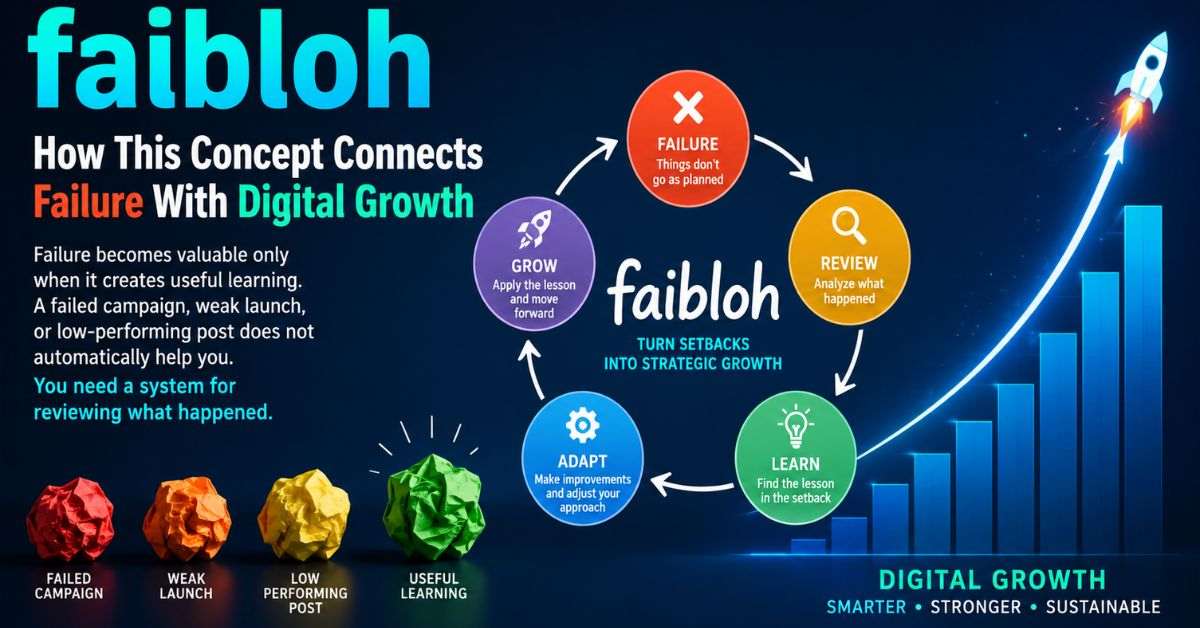
Failure becomes valuable only when it creates useful learning. A failed campaign, weak launch, or low-performing post does not automatically help you. You need a system for reviewing what happened.
This is a simple way to understand how it works:
| Situation | Weak Reaction | Stronger faibloh-Based Reaction |
| A product launch gets low sales | Cancel the idea completely | Study pricing, message, audience fit, and timing |
| A video gets poor views | Blame the algorithm | Review title, hook, topic, and retention |
| A business tool fails internally | Return to old habits | Find the exact workflow problem and redesign it |
| A brand post gets criticism | Delete and avoid the topic | Listen, clarify, and improve the message |
This approach does not celebrate failure for no reason. It treats failure as raw information. The goal now is not to fail. The goal is to learn faster, reduce repeated mistakes, and build better decisions.
For small businesses, this matters because resources are limited. A company cannot waste months chasing a weak idea. It needs quick feedback loops, clear goals, and simple tests.
For creators, it means every post, design, or campaign can become a learning asset. A low-performing idea can still reveal what the audience does not want.
Featured Snippet: What Does faibloh Mean?
faibloh means a flexible growth mindset that uses failure, feedback, and digital creativity to improve future decisions. It is often linked with innovation, online communities, business strategy, and creative resilience. The term is still evolving, so its meaning may vary across blogs and digital culture discussions.
Where faibloh Fits in Business, Creativity, and Online Culture
The concept works best when applied to real situations. It is not a magic formula. It is a way to think more clearly when something does not go as planned.
For entrepreneurs
A founder can use this idea when testing a new offer. Instead of spending a large budget on a full launch, they can run a small pilot, collect feedback, and improve the offer before scaling.
Useful questions include:
- What did customers ignore?
- What did they ask for?
- Where did they lose interest?
- What message created the most trust?
For creators
Digital creators can use the framework to improve content strategy. A failed post may show that the idea was unclear, the hook was weak, or the format did not match the audience.
The lesson is simple: do not judge your whole ability from one result. Judge the system behind the result.
For online communities
Communities grow when members feel heard. If a community event, discussion format, or content theme fails, moderators can use feedback to adjust the experience.
This is where faibloh connects with digital culture. It supports participation, learning, and better online interaction.
For personal growth
The idea can also help individuals. A failed project, rejected pitch, or missed goal can feel personal. But when you review it calmly, it becomes easier to separate identity from outcome.
You are not a failure. You are the person reading the signal.
Common Mistakes People Make With This Idea
Many people misuse modern trend concepts because they turn them into buzzwords. That weakens the message and reduces trust.
Here are the most common mistakes:
| Mistake | Why It Hurts | Better Approach |
| Treating it as a tech product | The term is broader than software | Explain it as a mindset, method, and cultural idea |
| Using it without examples | Readers may not understand the value | Show business, creator, and community use cases |
| Romanticizing failure | Failure can still cost time and money | Focus on controlled tests and learning |
| Ignoring data | Guessing leads to repeated mistakes | Review feedback, metrics, and behavior |
| Overusing the keyword | It sounds forced and spammy | Use natural language and related terms |
Another mistake is copying vague explanations from other websites. Readers want clarity. They want to know what the concept means, how to use it, and when it may not apply.
A smart approach keeps the idea grounded. If a strategy fails because of poor planning, weak research, or careless execution, call it what it is. The goal is honest improvement, not excuse-making.
Pro Tips and Best Practices for Using faibloh
The best way to apply faibloh is to build a repeatable learning loop. This works for startups, creators, freelancers, and small teams.
Start with a small test
Do not risk your full budget on an untested idea. Run a smaller version first. This could be a landing page, short video, email campaign, prototype, survey, or limited service offer.
Define success before you begin
A test needs a clear goal. Are you measuring sign-ups, replies, sales, shares, watch time, or customer feedback? Without a goal, you will not know what the result means.
Review results without emotion
It is normal to feel disappointed when something fails. Still, your review should focus on facts. Don’t focus on what you wanted to happen, but on what actually did happen.
Change one major thing at a time
If you change the offer, audience, design, price, and message all at once, you will not know what caused improvement. Make focused changes.
Keep a learning log
Create a simple record of tests and results. Include the idea, goal, result, lesson, and next action. Over time, this becomes a valuable strategy library.
Protect trust while experimenting
Do not mislead customers or followers just to test ideas. Honest communication matters. A creative experiment should still respect privacy, safety, and user expectations.
This is especially important in 2026, when audiences are more aware of AI content, data use, and online trust. People reward brands that are transparent and useful.
FAQs
What is faibloh in simple words?
faibloh is a modern idea about using failure as a tool for smarter growth. It connects creative testing, digital strategy, and learning from setbacks. Instead of hiding mistakes, it encourages people and businesses to study them and improve future actions.
Is faibloh a technology or a mindset?
faibloh is better understood as a mindset and strategy framework, not only a technology. Some articles connect it with smart systems or AI, but its wider meaning includes creativity, resilience, feedback, and digital culture.
How can a small business use this concept?
A small business can use it by testing ideas before scaling them. For example, it can launch a small campaign, measure customer response, study weak points, and improve the offer. This reduces waste and makes growth decisions more practical.
Why is failure important in digital creativity?
Failure is important in digital creativity because it shows what needs improvement. A weak design, post, product, or campaign can reveal audience preferences. When reviewed correctly, failure becomes feedback that helps creators make better work.
Is faibloh just another internet trend?
faibloh may be a trend, but it reflects a real need: people want better ways to adapt online. Its long-term value depends on how clearly writers, creators, and businesses use it. If it stays practical, it can remain useful.
Can this idea help online communities?
Yes, this idea can help online communities improve through member feedback. Community managers can test discussion formats, content themes, events, and rules. When something fails, they can adjust instead of abandoning the community.
What should people avoid when using faibloh?
People should avoid using the term as empty branding. It should not excuse poor planning, careless work, or repeated mistakes. The concept works best when paired with clear goals, honest review, audience feedback, and practical improvement.
Conclusion
faibloh is useful because it gives a name to something many creators and businesses already experience: growth rarely comes in a straight line. A failed post, weak launch, or rejected idea can still carry valuable insight when reviewed with patience and structure.
The smartest way to use faibloh is to keep it practical. Test small, learn quickly, protect trust, and improve based on evidence. In a fast-changing digital world, the people who learn from setbacks often build stronger brands, better communities, and more creative futures.