

 By
By Introduction
Feeling busy all day but still behind at night is frustrating. That is the problem exhentaime tries to solve: not just planning tasks, but helping people use time with more intention, less stress, and better balance. Many productivity tools focus only on calendars and checklists. A stronger system also asks what matters, what drains your energy, and how your schedule should adjust when life changes.
For readers searching for a clear answer, this article explains what the tool means, how it may support productivity, who it is best for, and how to use it without turning your day into a rigid timetable.
What Is exhentaime and Why Are People Searching for It?
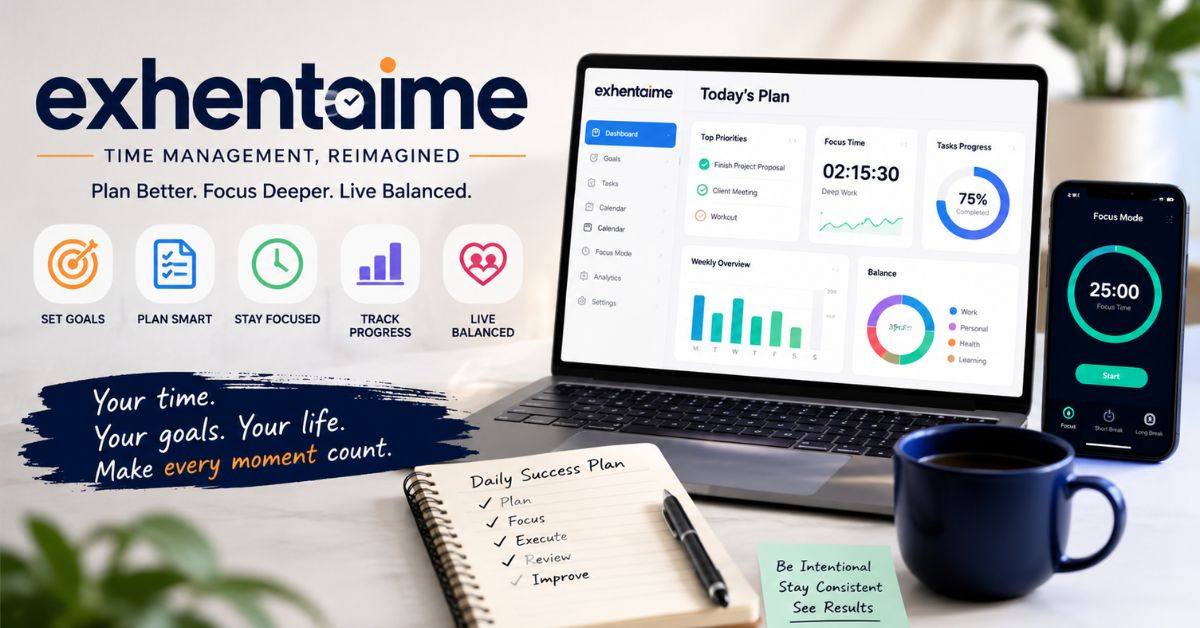
Exhentaime is best understood as a modern time management and productivity approach built around planning, tracking, reflection, and flexible adjustment. It connects daily tasks with bigger goals so users can work with purpose instead of only reacting to deadlines.
A useful way to understand it is this: a normal to-do list tells you what to do. A smarter time management system helps you decide what deserves your attention, when to do it, how to track progress, and when to change the plan.
This matters more in 2026 because work is more fragmented. Many people deal with messages, meetings, AI tools, remote collaboration, side projects, and personal responsibilities on the same day. A simple calendar is helpful, but it is not always enough.
Useful context: WHO and ILO estimated that long working hours contributed to 745,000 deaths from stroke and ischemic heart disease in 2016. Microsoft’s 2025 Work Trend Index also reported that many workers lack enough time or energy to do their work. These numbers do not prove any single tool works, but they show why sustainable planning matters.
How Does It Help With Goals, Focus, and Work-Life Balance?

The main promise of the system is simple: create a clearer link between your goals, your daily actions, and your energy. That makes it useful for professionals, students, freelancers, managers, and anyone who feels overwhelmed by scattered tasks.
Here are the core areas where it can help:
| Productivity Need | How the System Helps |
| Goal setting | Breaks large goals into smaller weekly and daily actions |
| Focus | Encourages deep work blocks and distraction control |
| Tracking | Shows what was completed, delayed, or repeated |
| Flexibility | Allows users to adjust plans when priorities change |
| Balance | Builds space for breaks, family time, health, and recovery |
For example, a freelancer may set a monthly goal to deliver four client projects. Instead of writing “finish projects” on a list, they can divide the work into research, drafting, review, delivery, and follow-up. This reduces confusion and makes progress visible.
A student can use the same idea for exams. Instead of studying randomly, they can plan chapters by week, review weak areas, track practice test scores, and leave space for rest. This makes learning feel less stressful.
A manager can use it for team planning. Weekly goals, meeting limits, task owners, and review points can reduce last-minute pressure.
For content creators, exhentaime can turn a large publishing goal into research, outline, writing, editing, graphics, and upload blocks.
How to Use exhentaime in a Simple Weekly System
This approach of exhentaime works best when you treat it as a repeatable routine, not a one-time setup. The goal is not to create a perfect schedule. The goal is to create a schedule you can actually follow and improve.
Featured snippet answer: To use this system, define your top goals, break them into weekly tasks, schedule focused work blocks, track what gets done, review what caused delays, and adjust the next plan based on real results.
Use this five-step process:
- Choose three priority goals for the week.
- Turn each goal into small tasks that can be completed in one sitting.
- Place the hardest tasks during your best focus hours.
- Track progress at the end of each day.
- Review the week and remove, move, or simplify tasks that did not work.
Here is a simple setup:
| Weekly Planning Step | Example |
| Main goal | Publish one blog post |
| Key tasks | Research, outline, draft, edit, upload |
| Focus block | 9:00–10:30 AM for writing |
| Tracking metric | Draft words completed and edit status |
| Review question | What slowed the article down this week? |
This kind of system prevents two common problems: overplanning and undertracking. Overplanning makes your calendar look productive but hard to follow. Undertracking makes it difficult to know why progress is slow.
Common Mistakes
Many people fail with productivity tools because they expect the tool to fix poor habits automatically. A tool can guide behavior, but it cannot choose priorities for you.
One common mistake is filling every hour. This creates pressure and leaves no room for delays, calls, family needs, or low-energy days. A better plan keeps 15–25% of the day open for changes.
Another mistake is tracking too many metrics. You do not need ten dashboards to understand your work. Start with three simple measures: completed tasks, missed tasks, and reason for delay.
A third mistake is confusing urgency with importance. Email can feel urgent, but it may not move your biggest goal forward. Use priority labels carefully.
Some users also treat exhentaime like a pressure system instead of a support system.
Some users also forget recovery time. Breaks, sleep, movement, and quiet time are not wasted time. They protect focus and help prevent burnout.
The final mistake is never reviewing the system. A weekly review is where real improvement happens. Without review, even the best planner becomes another place to store unfinished tasks.
Pro Tips and Best Practices
Start small. Use this method for one part of your life first, such as work projects, study planning, or content creation. Once the routine feels natural, expand it to personal goals or team workflows.
Use time blocking for deep work, but keep flexible blocks for admin tasks. For example, write from 9:00 to 10:30, answer messages from 11:30 to 12:00, and leave a flexible slot after lunch for unexpected work.
Add a “shutdown routine” at the end of the day. Write down what you completed, what needs attention tomorrow, and what can wait. This helps your brain stop carrying unfinished work into personal time.
Review your energy, not just your output. If you completed many tasks but felt exhausted, the system needs adjustment. Productivity should be sustainable.
Use automation carefully. Reminders, AI summaries, and smart scheduling can help, but too many alerts create more noise. Keep only the notifications that support real decisions.
For teams, set shared rules. Define what counts as urgent, when meetings are allowed, and where task updates should live. This reduces confusion and protects focus time.
FAQs
What is exhentaime used for?
Exhentaime is used for managing time, setting goals, tracking progress, and improving productivity without ignoring work-life balance. It helps users organize tasks, review results, and adjust plans when life or work priorities change. It is most useful for people who want structure with flexibility.
Is exhentaime a tool or a time management method?
It can be explained as both a productivity tool and a time management method, depending on how it is presented. The concept includes practical features like planning, tracking, focus management, and reflection. Users should check current product details before assuming exact app features.
Who should use this type of productivity system?
This type of system is useful for students, remote workers, freelancers, managers, content creators, and busy professionals. It works best for people who have many tasks but need better priority control. It may be less useful for someone who only needs a very basic checklist.
How can this type of system reduce stress?
This type of system can reduce stress by making priorities clear, limiting task overload, and creating space for breaks and review. Stress often grows when people carry too many unclear tasks in their mind. A structured plan helps users see what matters now and what can wait.
Does it replace Google Calendar or task apps?
No, it does not have to replace your calendar or task app. A good setup can work alongside tools like calendars, notes, reminders, or project boards. The value comes from the planning method, not from adding another complicated dashboard.
What should beginners track first?
Beginners should track completed tasks, missed tasks, and the reason tasks were delayed. These three metrics show whether the plan is realistic. After two or three weeks, users can add deeper measures like focus time, energy level, or goal progress.
Can exhentaime approach support teams?
Yes, this approach can support teams if everyone follows the same planning and review rules. It can help teams clarify priorities, reduce unnecessary meetings, and track progress more transparently. For best results, teams should keep the system simple and avoid over-reporting.
Conclusion
Exhentaime is most useful when it helps people make better choices with limited time. Its real value is not only in scheduling tasks, but in connecting goals, focus, progress tracking, and recovery into one practical routine. That makes it a strong fit for modern productivity and digital wellness content.
The best way to benefit from exhentaime is to start with a small weekly system, measure what actually happens, and adjust without guilt. A flexible plan that you review every week will usually beat a perfect plan that you abandon after two days.