

 By
By Introduction
Managing people becomes difficult when payroll, attendance, leave records, employee files, and reports are spread across emails, spreadsheets, and paper forms. Small errors can delay salaries, confuse employees, and waste HR time. That is why many organizations are exploring HRMS Globex as a cloud-based way to organize workforce operations in one place.
A modern HRMS is not only a digital filing cabinet. It helps HR teams reduce manual work, gives employees faster access to basic services, and helps managers make better workforce decisions. For growing businesses, this kind of system can support smoother payroll, cleaner attendance tracking, faster reporting, and more transparent employee communication.
This guide explains what the platform is, how it may support daily HR work, what features matter most, what mistakes to avoid, and how businesses can use it safely in 2026.
What Is HRMS Globex and Who Is It For?
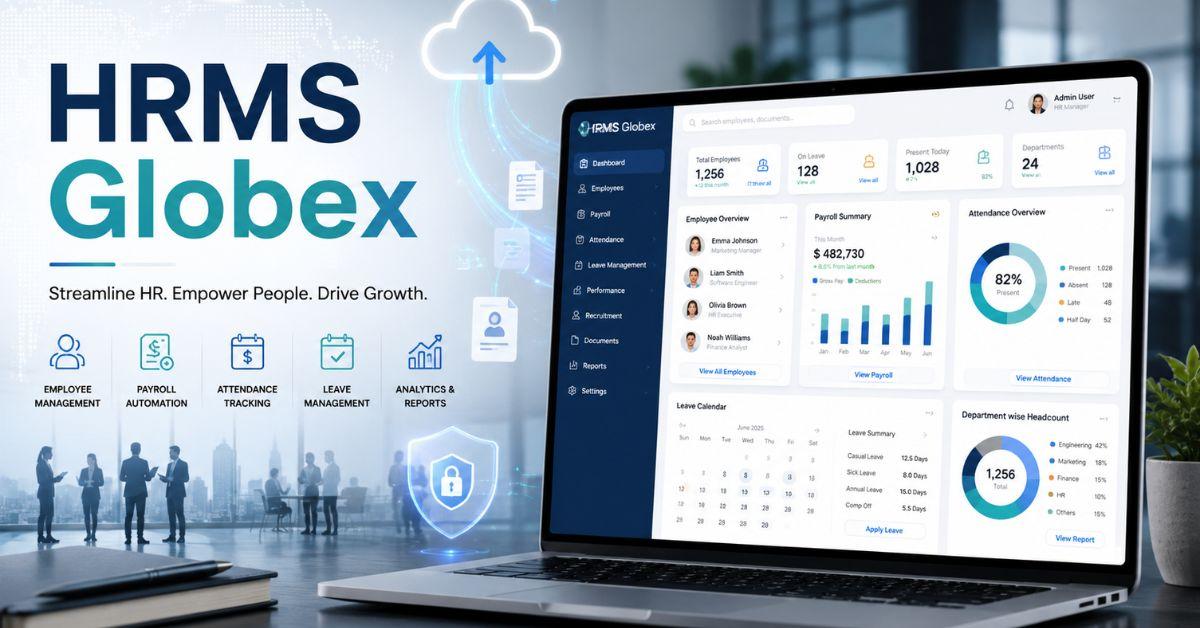
HRMS Globex is commonly described as a cloud-based Human Resource Management System that helps organizations manage employee data, attendance, payroll-related tasks, leave records, reporting, and HR workflows from one central platform. It is designed to reduce manual HR work and make employee information easier to access, update, and manage.
In simple words, it helps a company bring many HR tasks into one digital system.
Instead of keeping employee files in one folder, attendance in another sheet, and payroll notes in another tool, HR teams can manage key information from a single dashboard. This saves time and lowers the chance of repeated or outdated records.
The platform can be useful for:
- HR managers who handle records, payroll, and compliance tasks.
- Employees who need payslips, leave status, or profile updates.
- Team leaders who track attendance, performance, or approvals.
- Business owners who want cleaner reports and better workforce visibility.
For example, a retail company with multiple branches may struggle to collect daily attendance from each location. A cloud HRMS can help centralize attendance data so HR does not wait for separate files from every branch.
A service company may use HRMS Globex to manage leave requests, salary records, and employee documents in a more organized way. This helps managers respond faster and gives employees more confidence in HR processes.
Core Features Businesses Usually Expect
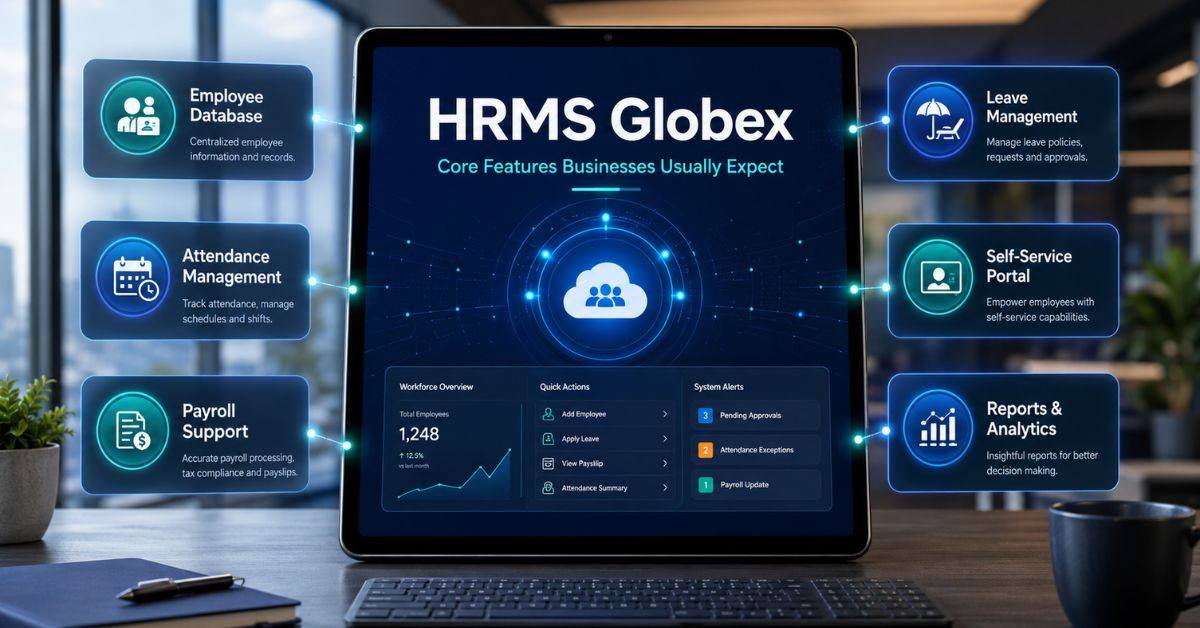
A good HRMS should solve real workplace problems, not only look modern. Before using any platform, businesses should check whether its features match their actual HR workflow.
Here are the most important areas to review:
| Feature Area | What It Helps With | Why It Matters |
| Employee Database | Stores employee profiles, job details, and documents | Keeps records organized and easier to update |
| Attendance Management | Tracks work hours, shifts, and attendance logs | Reduces manual tracking errors |
| Payroll Support | Helps manage salary data, deductions, and payslips | Supports timely and accurate salary processing |
| Leave Management | Allows leave requests, approvals, and balances | Makes absence planning clearer |
| Self-Service Portal | Lets employees view or update basic information | Reduces repeated HR questions |
| Reports and Analytics | Creates workforce, payroll, or attendance reports | Helps leaders make informed decisions |
One of the biggest strengths of a cloud HRMS is centralization. When data stays in separate files, errors become common. One section might be using an old phone number, while another has the most up-to-date one. A central HR system helps reduce this problem.
Employee self-service is also important. When employees can check payslips, leave balances, or profile information themselves, HR teams can spend less time answering routine questions.
For managers, reports matter most. A business may want to know which departments have high absenteeism, which roles need hiring, or how payroll costs are changing. A system like HRMS Globex can support better planning if data is entered correctly and reviewed regularly.
HRMS Globex Login, Access, and Daily Use
The official portal presents a login page where users enter their username and password. It also includes a forgot-password option. In most companies, employees receive login details from HR, IT, or an authorized administrator.
A safe login process usually follows these steps:
- Visit the official company-approved HRMS link.
- Enter the assigned username or employee ID.
- Add the correct password.
- Use the forgot-password option only from the official login page.
- Contact HR or IT if the account is locked or credentials do not work.
Employees should avoid searching random links online and entering login details on unknown websites. HRMS accounts often contain sensitive information such as salary details, personal records, tax information, and attendance history.
Daily use may include checking attendance, applying for leave, downloading salary slips, updating personal data, or viewing HR announcements. Managers may use the platform to approve leave, review reports, or check team attendance.
HRMS Globex can be especially helpful when employees work from different branches or remote locations. A cloud system makes access easier, but it also makes security more important. Strong passwords, role-based access, and regular account reviews should be part of the company’s HR technology policy.
Featured Snippet: How to Use an HRMS Platform Effectively
To use HRMS Globex effectively, a company should set up clean employee data, assign proper user roles, train employees, test payroll and attendance workflows, and review reports regularly. The system works best when HR, managers, IT, and employees all follow the same process.
Follow this simple process:
- Prepare employee data: Check names, IDs, departments, roles, salary fields, and contact details before uploading.
- Set user permissions: Give employees, managers, HR, and admins only the access they need.
- Train all users: Show employees how to apply for leave, view payslips, and update records.
- Test workflows: Run sample attendance, leave, and payroll tasks before full use.
- Monitor reports: Review errors, missing data, and approval delays every month.
- Improve the process: Update rules when company policies or labor requirements change.
This step-by-step approach helps prevent confusion after launch. Many HR software problems happen not because the tool is weak, but because the company starts using it without proper preparation.
For example, if old employee records are uploaded with wrong department names, reports will also be wrong. If managers do not understand approval steps, leave requests may stay pending. A clear rollout plan makes the system easier for everyone.
Benefits for HR Teams, Employees, and Managers
A digital HRMS can bring value to different groups inside the same company.
| User Group | Main Benefit | Practical Example |
| HR Team | Less manual admin work | HR can generate reports instead of updating many spreadsheets |
| Employees | Faster access to HR services | Employees can check leave balance without emailing HR |
| Managers | Better team visibility | Managers can approve leave and view attendance trends |
| Business Owners | Cleaner workforce planning | Leaders can review payroll cost and staffing needs |
| IT/Admins | Controlled access | Admins can manage users and permissions more clearly |
The biggest benefit is time saving. HR teams often spend hours on repeated tasks such as confirming leave balances, sharing payslips, updating employee details, or checking attendance records. Automation can reduce this workload.
The second benefit is better accuracy. Manual data entry can lead to mistakes. A centralized system reduces duplicate records and helps teams maintain one updated source of truth.
The third benefit is transparency. Employees feel more confident when they can see their own information, track requests, and understand approval status. This can improve trust between employees and HR.
For managers, HRMS Globex may support better decisions. Instead of guessing attendance trends or waiting for manual reports, managers can review updated data and act faster.
Security, Privacy, and Compliance Considerations
HR data is sensitive. It may include employee addresses, salary information, identification numbers, bank details, medical leave records, and performance notes. Any business using cloud HR software must treat this data carefully.
Important security checks include:
- Role-based access for employees, managers, HR, and admins.
- Strong password rules and, where available, multi-factor authentication.
- Clear approval workflows for payroll, leave, and employee changes.
- Regular user access reviews.
- Secure backup and recovery planning.
- Employee training on phishing and fake login pages.
- Clear rules for who can view, edit, export, or delete HR records.
Data protection rules differ by country, but the main principles are similar. Companies should collect only needed employee data, keep it accurate, protect it from unauthorized access, and avoid storing it longer than required by law or policy.
In 2026, AI and automation are becoming more common in HR technology. This can improve speed, but it also raises new questions about fairness, transparency, and data governance. If an HRMS adds AI-based recommendations, companies should understand how decisions are made and avoid using automated outputs without human review.
A system like HRMS Globex should be part of a wider HR governance process. Technology helps, but policy, training, and accountability keep the system safe.
Common Mistakes
Many companies buy HR software with good intentions but get poor results because they skip basic planning. Avoid these common mistakes:
- Starting with messy data: If old records are wrong, the new system will also show wrong results.
- Giving too much access: Not every manager needs access to salary or private employee files.
- Ignoring employee training: A system fails quickly when users do not know how to use it.
- Skipping policy updates: Digital workflows should match real company rules.
- Not testing payroll and attendance: These areas need careful checking before full launch.
- Using unofficial login links: Employees should only use approved company links.
- Expecting instant success: HR software needs time, feedback, and process improvement.
A common example is leave management. If a company has different leave rules for full-time, part-time, and contract workers, those rules must be configured correctly. Otherwise, employees may see wrong balances or managers may approve requests under the wrong policy.
Another mistake is poor ownership. HR may think IT owns the system, while IT thinks HR owns the rules. The best setup is shared ownership: HR manages policies and processes, while IT supports security and access.
Pro Tips and Best Practices
To get better results from HRMS Globex, businesses should treat it as a people-process system, not just software.
Start with a small rollout. Test the platform with one department or branch before expanding it company-wide. This helps the team find errors early and fix them before more users join.
Create a simple HRMS guide for employees. It should explain how to log in, apply for leave, download payslips, update profile details, and report issues. Keep it short and visual.
Review access rights every quarter. Employees change roles, managers move teams, and some users leave the company. Old access can become a security risk if no one checks it.
Use reports for action, not decoration. If attendance reports show repeated late check-ins, managers should discuss causes. If turnover reports rise in one department, HR should investigate workload, leadership, or hiring fit.
Keep human support available. Even with self-service tools, employees may still need help with sensitive issues. HR technology should make service better, not remove the human side of HR.
Finally, track improvement. Measure whether HR response time, payroll errors, approval delays, or employee questions decrease after using HRMS Globex. This helps the company prove value and improve the system over time.
FAQs
What is HRMS Globex used for?
HRMS Globex is used to manage key HR tasks such as employee records, attendance, leave, payroll support, reports, and employee self-service. It helps companies reduce manual paperwork and keep workforce information in one central system. Exact features may depend on the company setup.
Is HRMS Globex only for large companies?
No, HRMS Globex can be useful for growing businesses as well as larger organizations. Small companies may use it to organize records and attendance, while larger companies may use it for reporting, approvals, and multi-location workforce management. The value depends on business needs.
How do employees log in to HRMS Globex?
Employees usually log in with a username or employee ID and password given by their organization. They should use only the official company-approved portal. If the password does not work, the safest step is to use the official forgot-password option or contact HR/IT.
What data should companies prepare before using an HRMS?
Companies should prepare employee names, IDs, departments, job titles, joining dates, salary fields, leave balances, attendance rules, and reporting lines. Clean data is important because wrong records can create payroll errors, approval delays, and inaccurate reports after the system goes live.
Is cloud HRMS software secure?
Cloud HRMS software can be secure when companies use strong passwords, access controls, backups, encryption, and regular permission reviews. Security also depends on employee behavior. Users should avoid fake links, weak passwords, shared accounts, and downloading sensitive files without approval.
What are the biggest challenges when implementing HRMS software?
The biggest challenges are messy data, poor training, unclear workflows, integration issues, and resistance from employees. A company can reduce these problems by testing the system, training users, assigning clear ownership, and improving processes before full rollout.
Can HRMS software improve employee experience?
Yes, HRMS software can improve employee experience by making HR services faster and clearer. Employees can check leave status, view payslips, update basic details, and track requests without waiting for repeated email replies. Good training and simple design make the experience better.
Conclusion
HRMS Globex can help organizations move from scattered HR records to a more organized, cloud-based way of managing people, payroll-related information, attendance, leave, and employee services. Its real value comes when businesses prepare clean data, train users, protect employee information, and use reports to improve decisions.
For companies in 2026, HR technology is no longer only about saving time. It is also about trust, accuracy, security, and better employee support. HRMS Globex can be a useful platform, but the best results come from combining the software with clear policies, responsible access control, and a human-centered HR process.